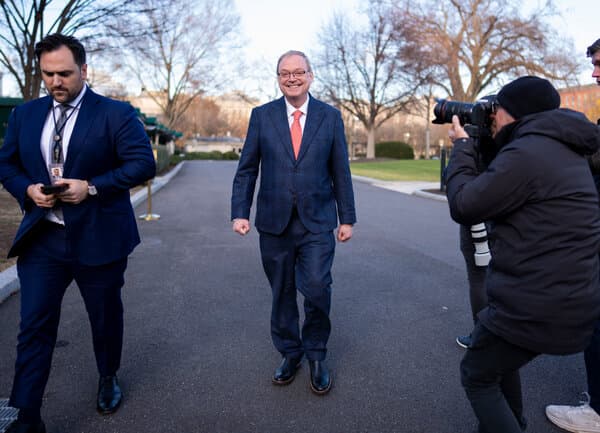
Trump Announces Decision on Federal Reserve Chair Nominee
In a significant move that could shape the nation's economic trajectory for years to come, former President Donald Trump has declared that he has finalized his choice for the next chair of the Federal Reserve. The decision, confirmed during a recent interview, signals a potential shift in monetary policy leadership as the central bank continues to navigate complex economic challenges. Trump indicated that he has made up his mind regarding the nomination, which is widely viewed as a critical appointment with far-reaching implications for interest rates, inflation control, and overall financial stability. While the specific individual named has not yet been publicly disclosed in the initial reports, speculation has been mounting in financial circles regarding potential candidates who align with Trump's economic vision. The Federal Reserve chair position holds immense power over the U.S. economy. The appointed leader influences decisions on benchmark interest rates that affect everything from mortgage costs for homeowners to borrowing expenses for businesses. By signaling a finalized choice, Trump is positioning himself to potentially reshape the Federal Reserve's approach to managing the economy should he return to office. During the interview, the former president emphasized his confidence in the unnamed candidate's ability to lead the central bank effectively. He suggested that his pick possesses the necessary qualifications and mindset to steer monetary policy in a direction that would foster economic growth. Trump has historically been vocal about his preference for lower interest rates, often criticizing the Federal Reserve when rates were raised during his presidency. The timing of this announcement is notable. The Federal Reserve is currently engaged in a delicate balancing act, attempting to bring inflation down to its 2% target while avoiding a deep recession that could lead to widespread job losses. The current chair, Jerome Powell, was initially appointed by Trump but was reappointed by President Joe Biden. His term does not expire until May 2026, but the speculation about future leadership often begins well in advance. Markets typically react to signals about future Fed leadership, as investors try to anticipate shifts in policy. A chair perceived as more hawkish on inflation tends to worry bond markets, while a dovish approach favoring lower rates is often cheered by stock market investors. Trump's announcement, even without a name, introduces a new variable into economic forecasting. The former president's approach to the Fed has always been unconventional. Unlike many of his predecessors who maintained a respectful distance from the independent central bank, Trump frequently commented on interest rate decisions and openly criticized Fed officials. His potential appointment of a new chair who shares his views on rates could lead to a period of heightened tension between the White House and the Federal Reserve, should he win the presidency. Potential candidates for the role have been the subject of intense speculation. Names like Kevin Warsh, a former Fed governor, and Judy Shelton, a controversial figure who has advocated for returning to the gold standard, have been mentioned in previous cycles. Other potential picks could include current Fed governors or economists who have served in previous Republican administrations. Whoever the selection turns out to be, they will likely face intense scrutiny in Senate confirmation hearings. The Federal Reserve operates with a degree of independence designed to insulate monetary policy decisions from short-term political pressures. However, the president appoints the chair and vice chairs, giving the executive branch significant influence over the long-term direction of the central bank. This power makes the Fed chair appointment one of the most consequential economic decisions a president makes. If Trump's pick were to be confirmed, it would likely lead to a review of the Federal Reserve's current strategy. Under Powell, the Fed has focused on using interest rates to manage inflation, a strategy that has involved aggressive rate hikes followed by periods of holding steady. A new leader with a different philosophy could shift priorities toward maximizing employment or supporting economic growth, even if it means tolerating slightly higher inflation in the short term. The announcement has already drawn reactions from various economic analysts. Some view the move as Trump solidifying his economic platform ahead of the election cycle, offering voters a clear contrast to the current administration's handling of the economy. Others warn that politicizing the Fed too heavily could undermine confidence in the institution's independence and its ability to make objective decisions based on data. As the news spreads, the focus will now shift to identifying the individual Trump has selected. Financial markets will parse every word of future statements for clues about the direction of monetary policy. Meanwhile, politicians in Washington will prepare for what is sure to be a contentious confirmation battle if a formal nomination is made. The Federal Reserve chair serves a four-year term and can be reappointed. The position requires a deep understanding of economics, the ability to communicate clearly with markets and the public, and the fortitude to make unpopular decisions when necessary. Trump's claim that he has made his selection suggests he believes he has found someone who meets these criteria while also aligning with his broader economic goals. In conclusion, the former president's assertion that he has finalized his Fed chair pick marks the beginning of a new chapter in the ongoing debate over the direction of U.S. monetary policy. While the identity of the nominee remains under wraps for now, the implications of the decision are already being felt across the economic landscape. As the election approaches, the Federal Reserve's leadership will remain a central issue, with this announcement setting the stage for future debates on how best to manage the nation's money supply and economic health.