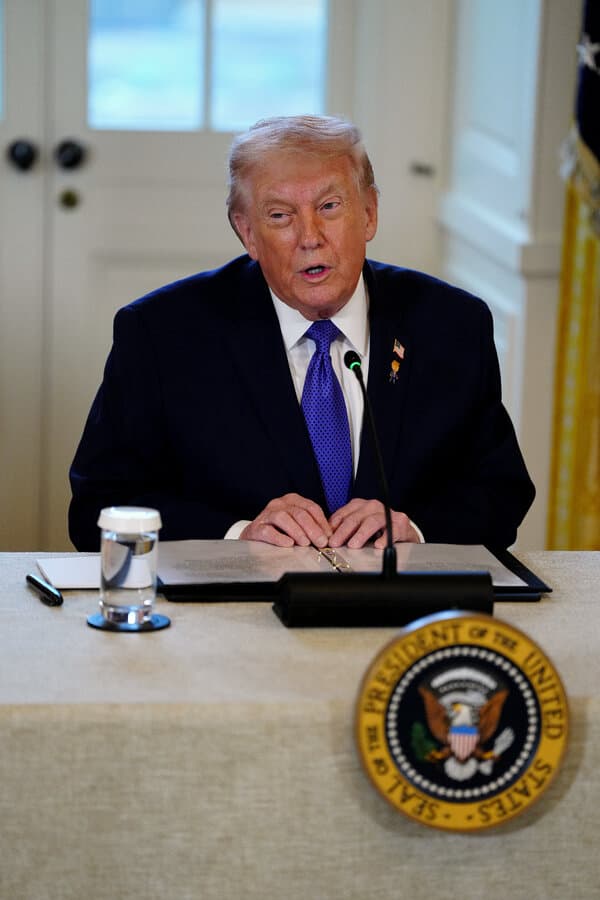
Trump's $100 Billion Venezuela Oil Initiative Faces Skepticism from Industry Leaders
Former President Donald Trump's ambitious proposal to secure approximately $100 billion in American investments for Venezuela's oil sector has been met with significant hesitation and skepticism among top U.S. energy executives. The plan, which represents a potential major shift in U.S. foreign policy toward the politically volatile South American nation, aims to revitalize Venezuela's crippled oil infrastructure while opening lucrative opportunities for American companies. However, industry leaders are expressing serious reservations about the viability and risks associated with such extensive investments in a country known for its unstable political climate, history of nationalizations, and complex regulatory environment. Venezuela, once Latin America's dominant oil producer with the world's largest proven reserves, has seen its petroleum industry decimated by years of mismanagement, underinvestment, and U.S. sanctions. The country's oil production has plummeted from over 3 million barrels per day in the late 1990s to less than 800,000 barrels daily in recent years, representing a catastrophic decline that has cost the global oil market significant supply capacity. Trump's proposal suggests lifting current sanctions and encouraging American energy giants to invest heavily in modernizing Venezuela's aging oil fields, refineries, and export infrastructure. Proponents argue this could stabilize global oil prices, reduce dependence on supplies from hostile nations, and provide substantial returns for American investors. The plan envisions U.S. companies bringing advanced technology and expertise to unlock Venezuela's vast reserves, potentially adding millions of barrels per day to global supply within several years. Despite these potential benefits, executives from major oil companies including ExxonMobil, Chevron, ConocoPhillips, and others have privately and publicly expressed concerns that make widespread industry participation unlikely. The primary obstacles include Venezuela's unpredictable political situation, where the government of President Nicolás Maduro faces ongoing challenges to its legitimacy, and the country's history of expropriating foreign assets without fair compensation. In 2007, Venezuela nationalized several foreign oil projects, forcing companies like ExxonMobil into lengthy legal battles to recover billions in investments. Additionally, executives point to the deteriorating state of Venezuela's oil infrastructure, which requires massive capital expenditures just to return to previous production levels. The estimated $100 billion investment would need to be spread across decades to be financially viable, making it susceptible to political changes in both Caracas and Washington. The current U.S. administration's policies could also reverse, potentially leaving investors stranded with assets that could be subject to renewed sanctions. The infrastructure challenges are particularly daunting. Venezuela's oil industry suffers from severe maintenance issues, outdated equipment, and a lack of investment in secondary recovery techniques needed to maximize output from mature fields. The country's primary upgraders and refineries operate far below capacity due to neglect and lack of spare parts. Reversing this decline would require not just capital, but also sustained technical expertise and a stable operating environment. Security concerns also weigh heavily on executives' minds. Venezuela has experienced significant political unrest, crime, and economic instability that could endanger personnel and operations. The presence of armed groups and the potential for social upheaval create additional layers of risk that complicate long-term investment planning. Furthermore, the legal framework for foreign investment in Venezuela remains problematic. The existing contracts give the state-owned PDVSA majority control in most joint ventures, limiting operational control for private partners. Profit repatriation mechanisms are restrictive, and the currency situation remains unstable. These factors combine to create an investment climate that most Western oil majors consider too risky, regardless of the potential rewards. International competition adds another dimension to the situation. While American companies hesitate, other nations including China, Russia, and Turkey have shown interest in expanding their energy ties with Venezuela. These countries may be more willing to accept higher political risks in exchange for strategic access to energy resources and regional influence, potentially leaving the U.S. on the sidelines despite the Trump administration's overtures. Market analysts note that even if some American investment materializes, the timeline for significant production increases would likely span many years. Bringing Venezuela's output back to even 1.5 million barrels per day would require sustained investment, political stability, and improved operating conditions that currently seem unlikely to materialize simultaneously. The proposal also raises questions about environmental standards and social responsibility. Venezuela's oil industry has historically operated with minimal environmental oversight, and critics worry that rapid production increases could exacerbate ecological damage in sensitive areas like the Orinoco Belt. Human rights organizations have also raised concerns about how renewed oil revenues might affect political repression and corruption in the country. From a geopolitical standpoint, the plan reflects a transactional approach to foreign policy that prioritizes economic opportunities over ideological considerations. However, the gap between political ambitions and corporate risk assessment appears substantial. Energy executives emphasize that their fiduciary duty to shareholders requires evaluating investments based on long-term financial returns, not political objectives. The cool reception from industry leaders suggests that Trump's Venezuela oil plan, despite its scale and ambition, faces an uphill battle to translate into actual investment commitments. Without substantial guarantees, improved political conditions, or a fundamental shift in Venezuela's investment climate, the proposal is likely to remain more of a political talking point than a viable business initiative. For now, most major American oil companies seem content to watch from the sidelines as the situation develops, prioritizing stability and predictable returns in other global markets over the potential high rewards and high risks that Venezuela represents.