Court Rejects Effort to Revive 9/11 Plea Deal
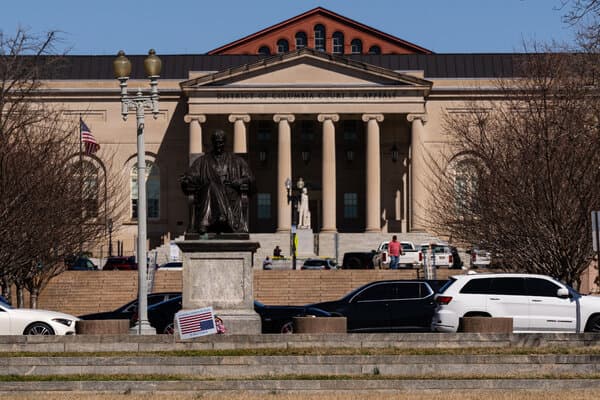
A federal appeals court has declined to intervene in a long-running legal battle over a plea deal for Guantanamo Bay detainees accused of plotting the September 11, 2001, terrorist attacks. The decision effectively leaves in place a lower court ruling that blocked the government from reviving an agreement that could have spared the defendants the death penalty. The case centers on three men—Khalid Shaikh Mohammed, Walid bin Attash, and Ramzi bin al-Shibh—who have been held at the U.S. military prison in Cuba for more than a decade. Military prosecutors had reached a plea agreement in 2012 that would have allowed the men to avoid execution in exchange for guilty pleas and cooperation. However, the deal collapsed after political pushback and legal challenges, leaving the capital murder case in limbo for years. In recent arguments before the U.S. Court of Appeals for the District of Columbia Circuit, defense attorneys urged judges to order the government to honor the original plea arrangement. They argued that prosecutors reneged on a binding agreement and that the defendants’ rights were violated by the prolonged uncertainty. The government countered that the military commission system has unique rules and that the plea deal was never finalized. The appeals court concluded it lacked jurisdiction to overturn the lower court’s decision, a move that keeps the case squarely in the military commission system and makes a death penalty trial more likely. The ruling has broad implications for the legal process at Guantanamo, where few cases have reached trial and many have stalled amid procedural disputes, concerns about torture, and questions about the fairness of the military commissions. Advocates for the detainees argue that restarting the death penalty process risks further delay and legal challenges. For victims’ families, the decision is another setback in a pursuit of accountability that has stretched more than two decades since the attacks that killed nearly 3,000 people. Legal experts say the case could still be appealed to the Supreme Court, but for now the path forward remains murky. If prosecutors proceed toward trial, the defense is expected to raise arguments about the use of evidence derived from CIA torture, as well as the government’s prior commitments in the plea negotiations. Meanwhile, Guantanamo remains a politically sensitive issue, with the Biden administration facing pressure to reduce the prison population while grappling with the complexities of resolving high-profile terrorism cases. The appeals court’s refusal to take up the case underscores the enduring legal and moral challenges of delivering justice for 9/11 while balancing due process, national security concerns, and the legacy of harsh interrogation practices. For now, the capital case against the alleged 9/11 plotters will continue to wind its way through the military commission, with a trial date uncertain and the prospect of further appeals looming. The decision also fuels debate over the viability of the military commissions themselves, which have been criticized for moving slowly and handling cases that many believe belong in civilian courts. Ultimately, the ruling pushes the unresolved questions about the plea deal, the death penalty, and the broader Guantanamo process back into the hands of military prosecutors and judges, ensuring that the legal saga—and the national reckoning with 9/11’s aftermath—remains far from over.