How the 'Monroe Doctrine' Echoes in China's Asian Power Strategy
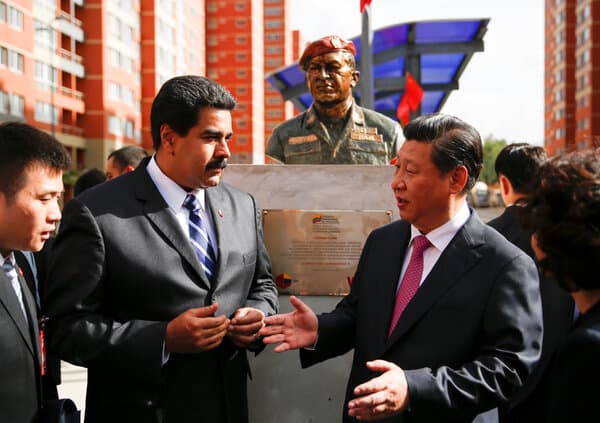
In a striking historical parallel, contemporary geopolitical maneuvering in Asia increasingly mirrors the tenets of the 19th-century Monroe Doctrine. This concept, originally asserting U.S. dominance over the Western Hemisphere, serves as a powerful lens through which to view China's expanding influence across the Indo-Pacific region. Beijing's strategy appears designed to position itself as the preeminent power in Asia, effectively signaling to external actors, particularly the United States, that their influence in the region should wane. The historical Monroe Doctrine, proclaimed by President James Monroe in 1823, declared that efforts by European nations to colonize or interfere in the Americas would be viewed as acts of aggression against the United States. It established a binary geopolitical reality: the Western Hemisphere was off-limits to Old World powers. Today, analysts observe a sophisticated reimagining of this doctrine in the East, where Beijing seeks to establish regional hegemony under the guise of an "Asia for the Asians" narrative. This vision encompasses not only economic dominance through initiatives like the Belt and Road but also military control over critical waterways and diplomatic pressure on neighboring states. The parallels are nuanced yet profound. Just as the U.S. historically viewed European interference with suspicion, China views American military presence—naval patrols, defense treaties with Japan and the Philippines, and military bases in Guam and Hawaii—as an intrusion into its rightful sphere of influence. This perspective underpins Beijing's aggressive posture in the South China Sea, where artificial islands have been militarized, and its coercive tactics toward Taiwan. The Chinese Communist Party frames these actions not as expansionism, but as the restoration of historical order and the defense of national sovereignty against foreign encirclement. Recent events involving Venezuela offer a compelling case study of how this doctrine plays out in practice, intertwining with U.S. foreign policy. The Trump administration's recognition of Juan Guaidó as Venezuela's legitimate president in 2019, and the subsequent economic sanctions, sought to isolate the Maduro regime. However, this pressure created an opening for Beijing. China, having already extended billions in loans to Caracas secured by future oil shipments, stepped in to fill the void left by retreating Western investment. By propping up the Maduro government economically and diplomatically, Beijing secured a strategic foothold in the Western Hemisphere—America's traditional backyard. This Venezuelan gambit illustrates the broader dynamics of the "Donroe" synthesis: the intersection of Chinese ambitions and American missteps. While Washington attempts to isolate regimes it deems illegitimate, Beijing opportunistically expands its influence, often with fewer political strings attached in terms of human rights or democratic governance. The result is a geopolitical chessboard where China checkmates U.S. efforts by offering economic lifelines to pariah states. In the South China Sea, similar dynamics are at play. As the U.S. conducts "freedom of navigation" operations, China reinforces its territorial claims, building a "Great Wall of water" that isolates American allies and asserts regional dominance. Furthermore, Taiwan remains the ultimate flashpoint in this evolving doctrine. Beijing's increasing military pressure and diplomatic isolation of the self-governing island reflect a commitment to preventing what it views as U.S. interference in its internal affairs. The "One China" principle is non-negotiable, and any attempt by Washington to bolster ties with Taipei is met with fierce retaliation. This mirrors the Monroe Doctrine's core principle: the U.S. would not tolerate European intervention in the Americas; China will not tolerate American intervention in what it considers its sovereign territory. The implications for the global order are significant. If China successfully implements an Asian Monroe Doctrine, it could fracture the current U.S.-led alliance system. Nations in the region, from the Philippines to South Korea, may be forced to recalibrate their foreign policies, balancing economic dependence on China with security guarantees from the U.S. The risk is a bifurcated region, where countries must choose sides or navigate an increasingly treacherous middle path. Economically, the strategy is already bearing fruit. Through the Regional Comprehensive Economic Partnership (RCEP) and the Digital Silk Road, Beijing is integrating regional economies into its orbit, reducing their reliance on Western markets. This economic gravity pulls neighboring countries closer, making political opposition to Beijing more costly. The Monroe Doctrine was always as much about economic exclusion as it was about military defense; China’s version is no different. It seeks to create a Sino-centric economic zone that is resilient to Western sanctions and pressure. In conclusion, the resurgence of a Monroe Doctrine-like mindset in Beijing, whether dubbed the "Donroe Doctrine" or simply "Xi Jinping Thought on Asian Security," represents a fundamental shift in the global balance of power. It challenges the post-World War II order and posits a vision of regional stability achieved through hegemony rather than multilateralism. As the U.S. grapples with its own domestic divisions and foreign policy inconsistencies, China is methodically building a sphere of influence that could define the 21st century. The Venezuela case is but one piece of a much larger puzzle, illustrating how Beijing leverages Washington's retreat to advance its own revisionist agenda. The world watches to see if the tiger of the East can successfully tame its region, or if the old powers will push back against this new iteration of a classic imperial strategy.