In the Path of a Raging Wildfire, a Luthier’s Precious Wood
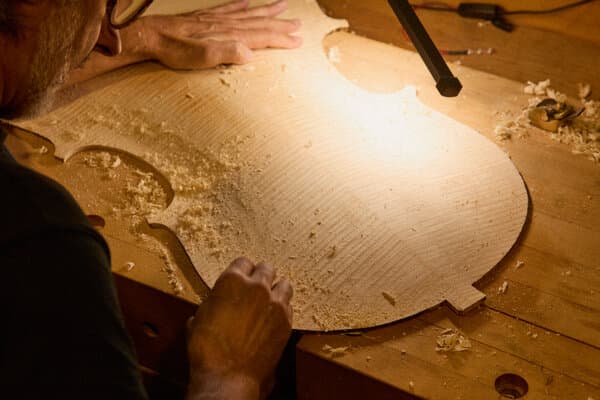
The Eaton Fire was advancing with terrifying speed, a hungry orange beast devouring everything in its path. But for Mario Miralles, the fire wasn't just an abstract threat; it was a predator aiming straight for his life's work. His workshop, a modest structure nestled in the foothills, held not just tools and furniture, but the accumulated heartwood of a career. Mario is a luthier, a maker of violins and cellos, and his inventory of rare woods—spalted maple, century-old spruce, Balkan flamed maple—was more than just material. It was potential music, future symphonies waiting to be carved, now facing incineration. As evacuation orders shifted from voluntary to mandatory, the chaos of fleeing neighbors became a backdrop to Mario’s singular, desperate focus. While others grabbed photo albums and passports, Mario faced a crisis of proportion. What do you save when your life is in your craft? The smoke filled the air, acrid and stinging, casting an apocalyptic twilight over the landscape. The heat was palpable even from miles away. He knew he didn't have time to load the truck with everything. The heavy wooden planks, some of which were gifts from patrons or salvaged from historic trees, were stacked in the workshop. To leave them was to admit defeat, but to stay was to risk being overrun by the flames. The story of the Eaton Fire is usually told in terms of acreage burned and homes lost. It is a narrative of macro-destruction and the impersonal force of nature meeting human negligence or bad luck. But within that sweeping tragedy are millions of micro-tragedies, individual stories of loss that are just as devastating to the people living them. For Mario, the fire represented the destruction of a specific kind of heritage. Luthiery is an ancient craft, passed down through generations, relying on the tactile relationship between hand and wood. You cannot simply go to a hardware store and replace a specific piece of tonewood. The grain, the density, the resonant properties of a specific tree cut in a specific year are unique. He began to grab pieces, his hands trembling not from fear but from the sheer weight of the decision. A billet of tiger-striped maple destined for a back plate went into the truck. A cello top, already rough-carved, followed. But the sheer volume of his hoard was overwhelming. There were racks of drying varnish, delicate tools calibrated to the micron, and finished instruments that he had spent months polishing. He worked in a fugue state, adrenaline masking the heat that was growing closer, the ash that was beginning to rain down like black snow. The decision to flee is a calculated surrender to the inevitable. When the order finally came, it was a physical blow. He had to leave the bulk of it behind. The drive out was a nightmare of taillights and panic. The sky was a bruised purple and orange, the columns of smoke rising like pillars of a ruined temple. Behind him, the workshop stood, a silent repository of unfulfilled potential. He could only imagine the sound of the fire taking it—the crack of the drying racks, the whoosh of ignited varnish, the groan of the structure giving way. Weeks later, when the mandatory orders were lifted and he was allowed to return, the devastation was absolute. The neighborhood was a moonscape of charcoal skeletons and drifting ash. But as he picked his way through the debris of his life, something caught his eye. It was a pile of charcoal that shifted in the wind. Underneath the blackened exterior, he found the ghost of the wood. The fire had carbonized the outside, but the core of some of the denser pieces remained. They were ruined, certainly, for the purposes of fine instruments—the structural integrity was compromised, the resonance gone. Yet, they were not entirely gone. He sat amidst the ruins, holding a piece of wood that looked like a meteorite. It was a strange, tragic victory. He had saved nothing, and yet, the essence of the wood, its stubborn refusal to vanish completely, remained. The Eaton Fire took his shop, his inventory, and his sense of security. But as Mario sifted through the ashes, he realized the fire hadn't taken the luthier. The knowledge of how to shape the wood, the ear for the music trapped inside it—that was still there, safe in his mind. In the path of the wildfire, the precious wood burned, but the craft, the human connection to the material, survived to be reborn from the ashes.