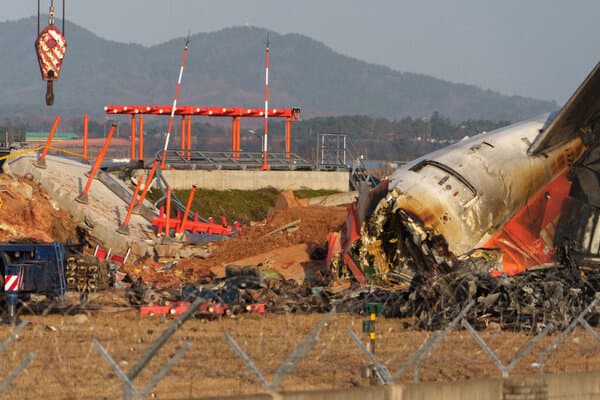
Investigators Identify Runway Wall as Primary Cause of Fatal 2024 Jeju Air Crash
A final investigation report has concluded that a concrete retaining wall at Muan International Airport was the primary cause of all fatalities in the tragic Jeju Air flight 2216 crash in January 2024. The Boeing 737-800, arriving from Bangkok, overshot the runway during a belly-landing due to a malfunctioning landing gear. The aircraft skidded at high speed before colliding with the embankment supporting the Instrument Landing System (ILS) localizer equipment. The report, released by the Aviation and Railway Accident Investigation Board (ARAIB), indicates that the impact with the unreinforced earth embankment and concrete structure triggered a catastrophic fire that claimed 179 lives. The investigation highlights that the ILS concrete wall, located 251 meters from the runway threshold, violated international safety standards which recommend a 90-meter safety area. Pilot decisions regarding the go-around procedure and the deployment of the Ram Air Turbine (RAT) were also scrutinized, but the physical obstruction of the wall is deemed the critical factor in the high death toll. The findings have sparked intense debate regarding airport infrastructure safety and regulatory oversight in South Korea.