Smithsonian Institution Faces Renewed Political Pressure
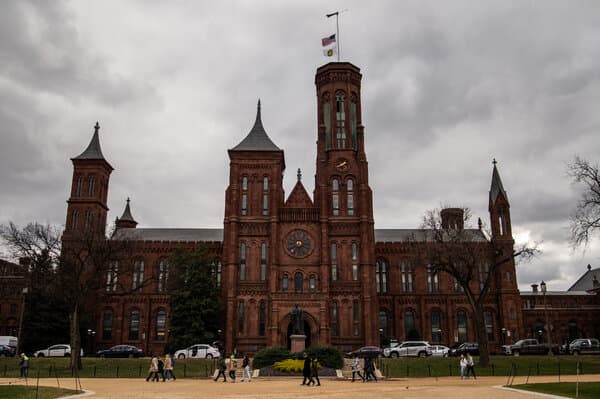
The Smithsonian Institution, a cornerstone of American cultural heritage and education, finds itself navigating a complex and increasingly fraught political landscape. As the nation's largest museum and research complex, it has historically been viewed as a bastion of scholarship and cultural preservation, largely insulated from the turbulent currents of partisan politics. However, recent shifts in the political climate have brought new scrutiny and pressure upon its leadership, programming, and overall direction. Sources close to the institution suggest that the Board of Regents is grappling with challenges that test its autonomy and commitment to non-partisan scholarship. The core of the tension appears to stem from demands that the institution align more closely with the specific ideological priorities of the current administration. These demands reportedly encompass a wide range of internal operations, from the curatorial choices made for upcoming exhibitions to the scientific research funding priorities. There is a palpable sense of unease among museum staff and academic researchers who worry that the very soul of the Smithsonian—its dedication to presenting factual, evidence-based history and science—is at risk. The pressure is not merely abstract; it manifests in budgetary reviews, personnel appointments, and public statements that seem to scrutinize the institution's adherence to perceived government mandates. Historically, the Smithsonian has operated with a significant degree of independence. Its funding model, a mix of federal appropriations and private donations, grants it a unique status. Yet, the federal portion of its budget—amounting to over half a billion dollars annually—provides a lever for those seeking influence. Critics argue that this public funding necessitates strict accountability to the taxpayer, defined as adherence to the agenda of the currently elected officials. Proponents of the institution's autonomy counter that true accountability means preserving the integrity of the historical and scientific record, which may sometimes challenge political narratives. The pressure campaign has manifested through various channels, including congressional hearings where Smithsonian officials have been grilled on their display of historical artifacts and the language used in exhibit descriptions. Particular focus has been placed on exhibitions dealing with sensitive topics such as civil rights, environmental policy, and the history of US foreign interventions. Critics from outside the institution label these exhibits as "woke" or biased, while educators and historians defend them as necessary for a complete and honest reckoning with the past. Inside the institution, the atmosphere is reportedly tense. Several high-profile curators and scientists have reportedly considered leaving for positions in academia or the private sector, citing an inability to perform their duties without interference. The fear is that a "chilling effect" will lead to self-censorship, where controversial but historically significant topics are avoided entirely. This could result in a sanitized version of history being presented to the millions of visitors who walk through the Smithsonian's halls each year. The Board of Regents, which includes the Chief Justice and the Vice President, is caught in a difficult position. They must navigate the political demands while upholding their fiduciary duty to the institution's long-term health and mission. Meetings have been described as tense, with debates over how much compromise is acceptable. Some members advocate for a firm stance on academic freedom, while others urge a more pragmatic approach to secure funding and avoid further political attacks. Adding to the complexity is the role of private donors. As federal funds become more conditional, the institution may look more toward private philanthropy. However, this path is not without its own perils. Wealthy donors can also exert pressure to shape exhibits or research in directions that favor their own interests or ideologies. The struggle to balance these competing forces—government oversight, political ideology, academic freedom, and donor influence—represents a critical inflection point for the Smithsonian. The outcome of this struggle has implications far beyond the National Mall. If the institution succumbs to political pressure, it sets a precedent for how cultural and scientific institutions are treated across the country. It raises fundamental questions about who controls the narrative of a nation's history. Is history a tool to be wielded for political gain, or is it a dispassionate record to be studied and learned from? As the pressure mounts, the Smithsonian stands at the center of this debate, its actions closely watched by allies and adversaries alike. The decisions made in the coming months will likely determine the character of the institution for decades to come, defining its role as either a politically compliant entity or an independent guardian of truth. The stakes could not be higher, not just for the artifacts housed within its walls, but for the intellectual health of the republic itself.