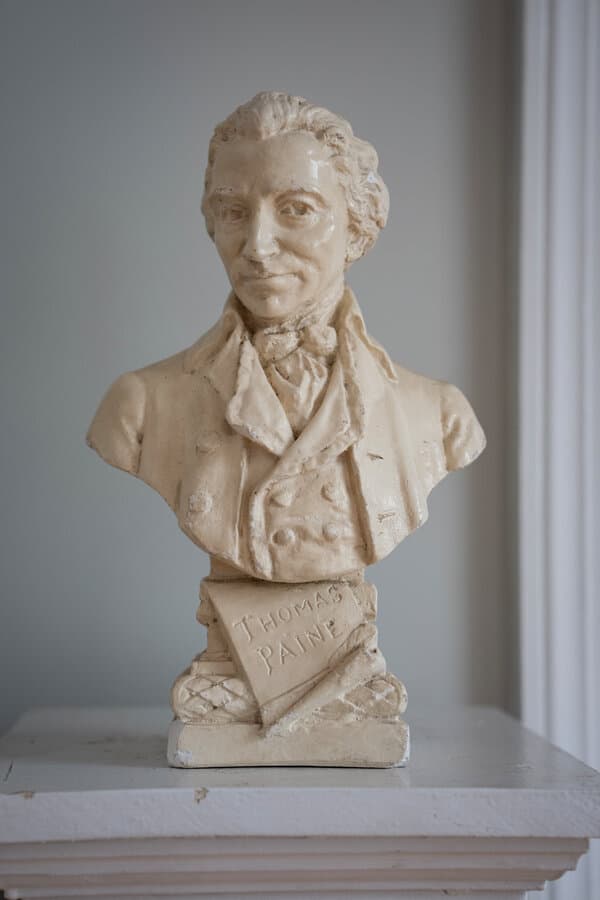
Thomas Paine's Radical Legacy Revisited: The Many Lives of a Revolutionary
Thomas Paine remains one of the most influential yet complex figures in the history of revolutionary thought. His pamphlet 'Common Sense' ignited the American Revolution, but his life extended far beyond that singular moment of triumph. This exploration delves into the multifaceted existence of a man who began as an obscure English excise officer and rose to become a titan of political philosophy. Paine's journey was marked by dramatic reversals of fortune, moving from celebrated hero in America to a reviled radical in Europe, eventually dying in relative obscurity in New York City. His intellectual contributions were foundational to the birth of the United States, yet his radical views on religion, social justice, and government structure often placed him at odds with the very leaders he helped empower. The 250th anniversary of 'Common Sense' serves as a poignant reminder of Paine's enduring, controversial influence. His writings didn't just inspire a revolution; they provided the blueprint for a new form of government based on natural rights and the sovereignty of the people. However, his refusal to compromise his principles led to his alienation from the American political establishment. In France, he participated in the Revolution there but was imprisoned during the Terror, nearly losing his life. His final years were spent in poverty, marginalized by a society that had embraced his revolutionary ideas but rejected the man himself. This retrospective examines the contradictions of Paine's character—his fierce independence, his unwavering commitment to liberty, and his ultimate isolation. It traces his evolution from a failed businessman to a pamphleteer whose words changed the world, highlighting the personal sacrifices he made for his ideological convictions. The article also explores how Paine's legacy has been reinterpreted over centuries, often reflecting the political anxieties of the times. Today, he stands as a symbol of radical dissent and the power of the written word to challenge authority and reshape society. His story is a testament to the solitary nature of true revolutionary thought and the high cost of challenging the status quo. The enduring relevance of Paine's work lies in his relentless critique of tyranny and his vision of a society governed by reason and equality. As we look back at his life, we see a man who was ahead of his time, whose ideas on universal rights and social welfare continue to resonate in modern political discourse. His legacy is not just one of historical importance but of a timeless struggle for human dignity and freedom. Paine's life serves as a powerful reminder that the architects of revolution are often doomed to be misunderstood by the societies they create. His story is one of courage, intellect, and ultimately, a profound loneliness that seems to be the price of being truly radical. The narrative of his life challenges us to consider the nature of legacy and the complex relationship between revolutionary ideas and the individuals who champion them. By examining the highs and lows of his career, we gain a deeper understanding of the forces that shape historical memory and the often-painful process of social change. Paine's journey through the Atlantic world of the late 18th century highlights the interconnectedness of revolutionary movements and the shared struggles for liberty across borders. His ability to articulate complex political theories in clear, accessible language democratized political discourse, empowering ordinary citizens to engage in the fight for their rights. Yet, this same clarity and directness made him powerful enemies and ultimately contributed to his downfall. The paradox of Thomas Paine is that he was a man who championed the common man yet remained an outsider to the very communities he fought for. His unwavering dedication to deism and rationalism alienated him from the religious establishment, while his critique of property rights and advocacy for social safety nets put him at odds with the economic elites of the new republic. In the end, Paine's story is not just about the birth of nations, but about the enduring cost of speaking truth to power. It is a narrative that continues to inspire and caution, reminding us that the path of the radical is often a lonely one, but essential for the march of progress. The examination of his life provides valuable lessons on the fragility of revolutionary gains and the importance of protecting dissenting voices. Paine's legacy endures not in stone monuments, but in the principles of democracy and human rights that he so passionately articulated. His life was a testament to the idea that one person, armed with little more than a pen and a conviction, can indeed change the world. This retrospective invites us to reconsider the man behind the myth, to understand the motivations and the sacrifices that defined his extraordinary existence. In doing so, we honor not just the revolutionary hero, but the complex, flawed, and brilliant human being who dared to imagine a different world. As we reflect on the 250 years since 'Common Sense' was published, the words of Thomas Paine seem as relevant now as they were then, challenging us to continue the work of building a more just and equitable society. His voice, though silenced centuries ago, echoes through the corridors of history, urging us toward liberty, reason, and a profound commitment to the common good.