Trump Administration Expands Border Patrol Presence in Minnesota
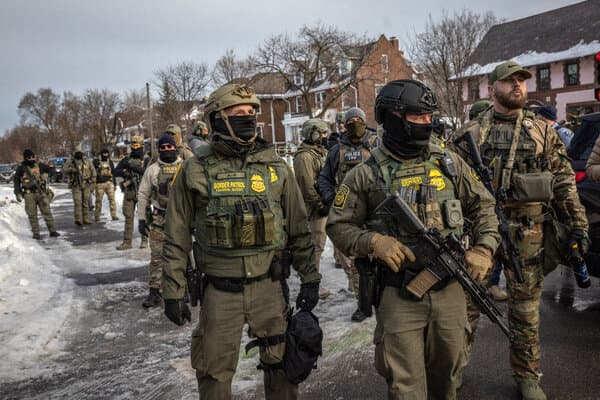
The Trump administration is significantly increasing the number of Border Patrol agents stationed in Minnesota, according to official sources. This strategic deployment represents a notable shift in federal border security operations, traditionally focused on southern border states. Officials indicate that the expanded presence in the Upper Midwest is intended to address emerging security concerns and strengthen interdiction capabilities along the northern frontier. Minnesota's unique geographical position, sharing a water boundary with Canada, has prompted this strategic reallocation of resources. The state's extensive international border and major transportation hubs make it a potential corridor for illicit activities. Federal authorities are reportedly concerned about increased smuggling operations and unauthorized crossings in this region. The decision follows a series of assessments by the Department of Homeland Security regarding vulnerabilities in the northern border. While the southern border has historically received the bulk of attention and resources, recent intelligence suggests that the northern border requires enhanced monitoring. Minnesota, with its network of lakes and forests along the Canadian boundary, presents distinct challenges for border enforcement. Local law enforcement agencies have been briefed on the impending arrival of additional federal personnel. Coordination between state police, county sheriffs, and Border Patrol is expected to intensify. Some community leaders have expressed concerns about the potential for increased tensions and the impact on local populations, particularly in border communities. The deployment includes not only field agents but also specialized units equipped with advanced surveillance technology. Drones, thermal imaging, and sensor networks are part of the enhanced security package. These tools are designed to provide comprehensive coverage of remote areas that were previously difficult to monitor effectively. Economic implications are also being considered. The presence of federal agents often brings associated spending in local economies, though some businesses worry about potential disruptions to cross-border trade and tourism. Minnesota's border regions have long relied on relatively fluid movement between the US and Canada for both commerce and cultural exchange. Opposition lawmakers have criticized the move as political posturing, arguing that resources would be better spent addressing documented issues at the southern border. They contend that the northern border has statistically lower rates of illegal crossings and that the deployment is disproportionate to the actual threat level. Supporters of the strategy argue that proactive measures are essential to prevent potential security gaps from being exploited. They point to recent seizures of contraband and intelligence regarding trafficking networks operating in the region as justification for the increased presence. The timing of this deployment coincides with broader administration efforts to tighten immigration enforcement nationwide. It reflects a comprehensive approach to border security that extends beyond traditional geographic boundaries. Administration officials have emphasized that all borders require vigilance and that resources should be allocated based on threat assessments rather than historical patterns alone. As agents begin to arrive and establish operations, the practical impact on daily life in Minnesota border communities remains to be seen. Residents are watching closely to see how this new chapter in border security will affect their region, their livelihoods, and their relationship with their Canadian neighbors.