Trump Defends Position on Minneapolis ICE Facility Shooting After Video Review
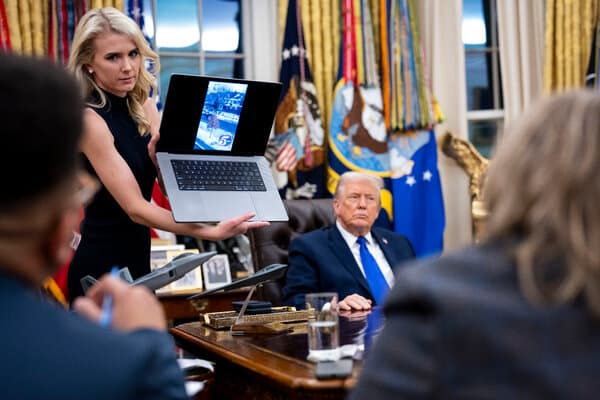
Former President Donald Trump has responded to inquiries regarding his assessment of the recent shooting incident at an Immigration and Customs Enforcement (ICE) facility in Minneapolis. The event, which took place earlier this week, has sparked intense political debate and conflicting narratives regarding the circumstances surrounding the violence. Trump's comments come after he viewed video footage of the confrontation, which he claims supports his initial conclusions about the nature of the incident. According to sources close to the former president, he maintains that the shooting validates concerns about border security and immigration enforcement policies currently in place. The Minneapolis shooting involved a suspect who allegedly opened fire near the ICE processing center, resulting in a law enforcement response that left several individuals injured. Local authorities and federal agencies have been investigating the motive behind the attack, while political figures have utilized the tragedy to advance their respective policy agendas. Trump's statement specifically addressed the video evidence, suggesting that it reveals details often overlooked by mainstream media coverage. He emphasized that the visual documentation of the event aligns with his warnings about potential violence related to immigration disputes. White House officials and Democratic lawmakers have criticized Trump's interpretation, arguing that his comments politicize a sensitive law enforcement matter and potentially inflame tensions. Meanwhile, supporters of the former president view his analysis as a necessary correction to what they describe as incomplete reporting by major news outlets. The video in question, which has been circulating among various media platforms, reportedly shows moments leading up to and during the shooting, though full context remains a point of contention among investigators. Minneapolis police officials have urged caution in drawing premature conclusions, noting that their investigation is ongoing and that full analysis of the video evidence is necessary before definitive statements can be made. Trump's engagement with this specific incident highlights his continued focus on immigration issues, which remain central to his political platform as he maintains a prominent role in American political discourse. The former president has consistently advocated for stricter immigration controls and has frequently cited incidents of violence to support his policy positions. In his response to questions about the ICE shooting, Trump reportedly suggested that the incident demonstrates the need for enhanced security measures at immigration facilities and a reevaluation of current enforcement procedures. Critics point out that Trump's rapid assessment of the video may not account for the complex factors that investigators are still working to understand. They argue that preliminary interpretations of video evidence can be misleading without proper forensic analysis and witness testimony. The Minneapolis ICE facility has been the site of various protests and political activities in recent years, reflecting broader national divisions over immigration policy. Community leaders in Minneapolis have called for unity and patience as the investigation proceeds, emphasizing the importance of allowing law enforcement to complete their work without undue political pressure. Trump's commentary arrives at a time when immigration remains a highly contentious issue in American politics, with the upcoming election cycle likely to see increased focus on border security and enforcement policies. The video evidence that Trump referenced has not been released publicly in its entirety, with investigators citing the ongoing nature of the case as reason to limit dissemination. Media outlets have reported varying descriptions of the video contents, contributing to the polarized interpretations of the incident. Trump's assertion that the video supports his conclusions has drawn both praise and condemnation, reflecting the deep partisan divide that characterizes contemporary American political discourse. Legal experts have noted that while video evidence can be powerful, it often requires context that may not be immediately apparent, including the events that preceded the recorded moments and the motivations of those involved. The former president's rapid response to the shooting demonstrates his continued ability to dominate news cycles and shape political conversations, even while not holding public office. His statements regarding the Minneapolis incident are likely to be cited in future political debates about immigration policy and law enforcement tactics. As the investigation continues, both Trump and his political opponents appear prepared to use this incident to advance their contrasting visions for how America should handle immigration and security challenges. The controversy over the video interpretation underscores the broader challenge of navigating complex public safety incidents in an era of instant information and divided public opinion. Trump's specific reference to the video evidence adds another layer to the ongoing debate about how visual documentation of violent events should inform public policy and political discourse. Law enforcement officials continue to urge patience and careful consideration of all evidence before drawing final conclusions about the motives and circumstances of the Minneapolis ICE facility shooting. The incident serves as a flashpoint in the continuing national conversation about immigration, security, and the role of video evidence in shaping public understanding of complex events. Trump's engagement with this specific case illustrates the enduring political potency of immigration as an issue and the former president's skill at leveraging individual incidents to support broader policy arguments. As more details emerge from the official investigation, the interpretations and political uses of this event will likely continue to evolve, reflecting the complex intersection of law enforcement, immigration policy, and partisan politics in contemporary America. The Minneapolis shooting investigation remains ongoing, with federal and local authorities working to piece together a complete picture of the circumstances that led to the violence. Trump's comments, while drawing significant attention, represent just one perspective in a multifaceted story that encompasses issues of public safety, immigration enforcement, and political rhetoric. The video evidence that forms the basis of Trump's assessment has become a focal point in the larger debate about how America processes and responds to incidents of violence connected to controversial policy areas. Future developments in this case will likely be closely watched by both political camps, each seeking to validate their preexisting positions on immigration and law enforcement through the outcomes of this specific incident. The complexity of the situation highlights the challenges facing investigators, policymakers, and the public as they attempt to understand and respond to violent events in an environment of intense political polarization and instant communication. Trump's statement about the Minneapolis ICE shooting demonstrates how individual incidents can rapidly become symbols in larger political battles, with video evidence serving as a powerful but potentially ambiguous tool in these contests over narrative and policy direction.