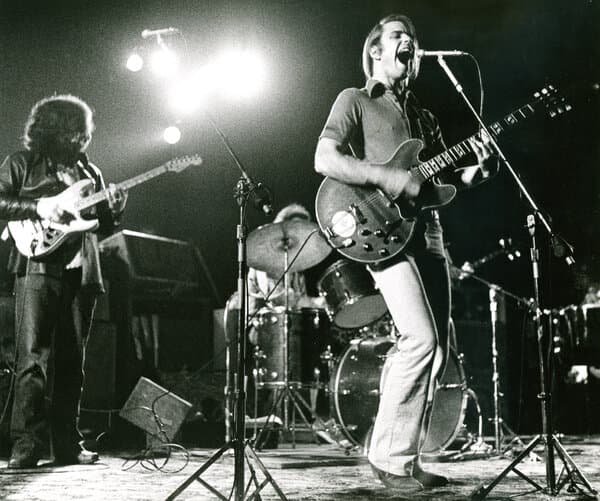
Uncovering the Enigmatic Legacy of Tom Verlaine Through His Personal Archives
The recent opening of Tom Verlaine's personal archives offers an unprecedented glimpse into the life of the famously private musician. For decades, the Television frontman remained an enigma, known more for his searing guitar work and poetic lyrics than for any personal revelations. Now, a collection of his writings, sketches, and correspondence is shedding new light on the man behind the music. Verlaine, born Thomas Miller, was a foundational figure in the 1970s New York punk and new wave scene. His band Television, with their landmark album 'Marquee Moon,' helped define the sound of the era. But despite his influence, Verlaine was notoriously shy of the spotlight. He rarely gave interviews and when he did, he often deflected personal questions. His archives, however, paint a different picture—a portrait of a deeply thoughtful and artistic individual. The collection includes early drafts of iconic songs, revealing the meticulous process behind his seemingly effortless poetry. You can see the evolution of lines that would become anthems for a generation. There are also pages of philosophical musings, showing a mind constantly grappling with big questions about art, life, and existence. Another fascinating component of the archives is a series of visual art pieces. Verlaine was also a talented visual artist, and his sketches and paintings often mirrored the abstract, angular quality of his music. These works provide a visual language for the sounds he created, offering a more holistic understanding of his artistic vision. Correspondence with fellow musicians and collaborators reveals a different side of Verlaine. Letters to and from Richard Lloyd, his bandmate in Television, show a relationship built on creative friction and mutual respect. There are also exchanges with Patti Smith, with whom he shared a deep, platonic bond. These letters strip away the mythology, showing the day-to-day struggles and triumphs of building a revolutionary band. The archives also shed light on the later years of his career. After Television's initial breakup, Verlaine embarked on a solo career and continued to innovate. The materials show his continued dedication to his craft, constantly experimenting with new sounds and ideas. He remained a vital force in music until his passing, always pushing forward. Perhaps most strikingly, the archives confirm that Verlaine's mystique was not an act. He was a genuinely private person who believed his art should speak for itself. The documents reveal a man who was deeply committed to his artistic integrity above all else. He shunned fame not out of arrogance, but out of a sincere belief that it interfered with the creative process. In this way, the archives do not so much demystify Tom Verlaine as they re-mystify him on his own terms. They show us a figure who was even more complex, more dedicated, and more artistically driven than his legend suggests. He was a true artist's artist, and these papers serve as a testament to that unwavering commitment. For fans and scholars, this collection is an invaluable resource. It fills in the gaps of our understanding, providing context and depth to a figure who shaped so much of modern music. While Tom Verlaine may have preferred to remain a mystery, his archives tell a story that is too compelling to ignore. They reveal the heart of an artist who gave everything to his craft, leaving behind a legacy that continues to resonate. The full story is now coming to light, and it is every bit as fascinating as his music.