U.S. Faces Global Criticism at UN Over Venezuela Intervention
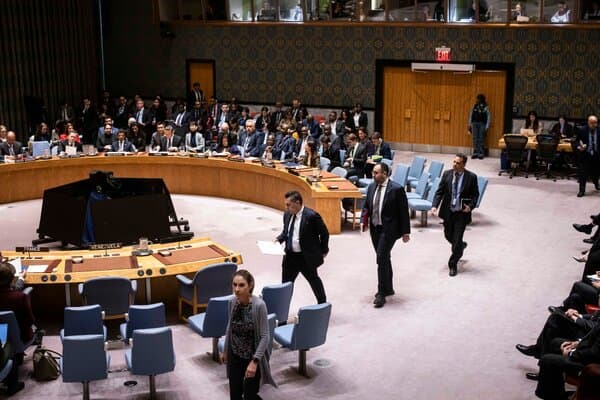
The United Nations Security Council convened on Tuesday to address the escalating crisis in Venezuela, a session that quickly devolved into a broad denunciation of the United States' recent military and diplomatic maneuvers in the South American nation. In a stark departure from typical geopolitical alignments, traditional American allies joined adversaries in a unified chorus of dissent, revealing deep fractures in the international community regarding Washington’s unilateral actions. The emergency meeting was requested by the United States following the Venezuelan government’s seizure of a U.S. drone surveillance aircraft operating near the border with Colombia. American officials described the operation as a necessary intelligence-gathering mission to monitor drug trafficking routes and alleged terrorist training camps operating within Venezuela. However, Venezuelan President Nicolás Maduro characterized the incursion as an act of war and an invasion of sovereignty, using the incident to rally his domestic base and deflect attention from the country’s ongoing economic collapse and hyperinflation. During the session, U.S. Ambassador to the UN, Linda Thomas-Greenfield, delivered a fiery address defending the intervention. She cited Article 51 of the UN Charter, arguing that the U.S. was acting in self-defense to protect its national security interests from 'hostile non-state actors' allegedly sponsored by the Maduro regime. 'We cannot stand idly by while a narco-state on our hemisphere threatens regional stability and exports violence,' she asserted, urging the Council to recognize the legitimacy of U.S. operations. The response from the international community, however, was unexpectedly harsh. The most damaging blow came from France and the United Kingdom, two of America's closest NATO partners. While they have historically supported sanctions against Venezuela, they drew a firm line at military intervention. The French Ambassador stated that 'unilateral military actions, regardless of the justification, undermine the principles of international law and the authority of this Council.' He emphasized that interventions bypassing the UN Security Council set a dangerous precedent for global instability. The United Kingdom echoed this sentiment, warning that the U.S. operation lacked the necessary authorization and could trigger a wider regional conflict, specifically risking the stability of neighboring Brazil and Colombia. Russia and China, long-time backers of the Maduro government and frequent antagonists of U.S. foreign policy, were predictably scathing. The Russian representative accused the U.S. of 'imperialist aggression' and likened the drone incident to a provocation designed to justify a full-scale invasion, drawing parallels to the lead-up to the Iraq War. China urged all parties to exercise 'maximum restraint' but criticized the U.S. for applying 'double standards' regarding national sovereignty. Perhaps the most significant development was the reaction from the 'Group of 77 and China,' a coalition of 134 developing nations. A representative from Mexico, speaking on behalf of the bloc, condemned the U.S. action as a violation of the sovereignty of a Global South nation and called for an immediate cessation of hostilities. This broad unity between European allies, emerging economies, and U.S. adversaries highlights a global consensus against unilateral military interventions. The timing of this confrontation is critical. Venezuela is currently experiencing the worst economic crisis in its history, with millions of citizens fleeing the country in a massive refugee crisis. The Maduro government has maintained its grip on power through a combination of military force and support from international allies like Russia, Cuba, and Iran. The U.S. has been attempting to pressure Maduro to step down, recognizing opposition leader Juan Guaidó as the legitimate president for several years, though that diplomatic recognition has wavered in recent months among European allies who have grown frustrated with the opposition's inability to gain power. Analysts suggest that the U.S. military operation may have been intended to project strength ahead of the 2024 domestic election cycle, but it has backfired diplomatically. By overplaying its hand, Washington has managed to unite a disparate group of nations against it, potentially weakening the sanctions regime that has been the primary tool of pressure against Caracas. No resolution was passed at the meeting, as the U.S. almost certainly would have vetoed any text condemning its actions, and Russia or China would have vetoed any resolution authorizing force. The session ended in a diplomatic stalemate, but the message from the international community was clear: the United States stands increasingly isolated on the Venezuela issue, even among those usually considered its friends. The incident casts a shadow over upcoming diplomatic summits and raises questions about the future of U.S. foreign policy in Latin America. As the dust settles in New York, the situation on the ground remains volatile. Reports from the Venezuelan border indicate increased troop movements and heightened tension. International mediators, including the Vatican and Norway, have called for an emergency de-escalation meeting, but with rhetoric reaching a fever pitch on all sides, the path to a peaceful resolution appears increasingly narrow. The United Nations, designed as a forum for peace, has once again been reduced to a stage for geopolitical theater, with the safety and wellbeing of the Venezuelan people hanging in the balance.