White House Comments Cast Doubt on FBI Investigation of Minneapolis ICE Shooting
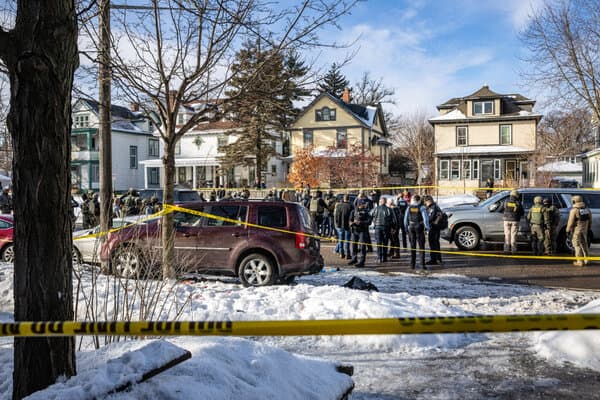
The Federal Bureau of Investigation's ongoing inquiry into the recent shooting at a Minneapolis Immigration and Customs Enforcement (ICE) facility is facing mounting skepticism following remarks made by officials within the White House. The incident, which took place earlier this week, involved an armed individual who approached the facility and opened fire before being neutralized by security personnel. While details regarding the shooter's motives remain under investigation, the political fallout has shifted focus toward the integrity and independence of the federal probe. Administration officials, speaking on the condition of anonymity, suggested that the shooting may have been part of a broader pattern of targeted violence against federal law enforcement agencies. These comments have sparked a debate among legal experts and civil liberties groups regarding the potential politicization of the investigation. Critics argue that preemptively framing the event through a specific political lens could compromise the FBI's ability to conduct a neutral fact-finding mission. The local field office of the FBI in Minneapolis had initially urged the public to avoid speculation as they processed the crime scene and reviewed surveillance footage. However, the narrative shifted rapidly after the White House Press Secretary addressed the issue during a daily briefing, stating that the administration was "closely monitoring" the situation and hinted at "ideological motivations" behind the attack. This characterization has drawn sharp rebuke from defense attorneys and community activists in the Minneapolis-St. Paul area, who fear that such rhetoric could unfairly bias the investigation against specific groups. The tension highlights a recurring friction between federal law enforcement operations and the political messaging coming from the Executive Branch. Legal analysts note that while the White House has the authority to comment on public safety matters, doing so while an active criminal investigation is underway is generally discouraged to preserve the chain of evidence and witness testimony. The Minnesota chapter of the ACLU issued a statement calling for transparency and reminding the public that the FBI's findings must be based solely on empirical evidence rather than political imperatives. Meanwhile, the Department of Homeland Security has maintained a heightened security posture at ICE facilities nationwide, citing the Minneapolis attack as a catalyst for reviewing security protocols. The shooting incident itself resulted in no civilian casualties, though a security guard sustained minor injuries. The shooter, whose identity has not yet been released pending notification of family, was armed with a semi-automatic rifle. Investigators are currently analyzing the shooter's digital footprint, social media history, and personal relationships to establish a clearer picture of intent. The probe is also examining whether the attacker acted alone or as part of a coordinated effort. The FBI has remained tight-lipped regarding the specific nature of the evidence collected, stating only that the investigation is "comprehensive and ongoing." The controversy stems largely from the timing of the White House's statements. By commenting on the potential ideological roots of the violence so early in the investigation, officials have inadvertently fueled accusations of agenda-setting. Political opponents have seized on the remarks, accusing the administration of attempting to use the tragedy to bolster support for stricter immigration enforcement or to score political points against critics of the agency. Conversely, supporters of the administration argue that acknowledging the potential for targeted violence against federal officers is a necessary step in protecting national security interests. The local police department in Minneapolis, which initially responded to the 911 calls, has since turned over primary jurisdiction to federal authorities due to the nature of the target—a federal building. This jurisdictional handover is standard procedure, but it places the FBI in the difficult position of managing an investigation that is simultaneously under intense public scrutiny and political pressure. As the investigation progresses, the FBI is expected to release a detailed report outlining the shooter's background and the chain of events. Until then, the discord between the Bureau's methodical approach and the White House's immediate narrative framing serves as a stark reminder of the fragility of trust in public institutions. The coming days will likely determine whether the FBI can maintain its reputation for impartiality or if the shadow of political influence will linger over the final conclusions. Stakeholders across the political spectrum have called for patience, urging the public to allow the investigators to complete their work without external interference. For the residents of Minneapolis, the priority remains public safety and ensuring that the federal building is secure against future threats, regardless of the political discourse surrounding the event. The incident has also reignited discussions regarding the safety of soft targets and the adequacy of security measures at government facilities. Homeland security experts are currently reviewing the protocols that were in place during the attack, looking for any gaps that could be exploited in the future. While the FBI continues to piece together the puzzle of why this attack happened, the broader conversation about the role of political rhetoric in shaping public perception of justice remains very much alive. The ultimate test will be the credibility of the findings when they are finally presented to the public. If the FBI's report conflicts with the early assertions made by the White House, it could lead to a significant erosion of trust in the administration's ability to handle crisis communications effectively. On the other hand, if the investigation confirms that the shooter was motivated by specific ideological goals, the administration will likely point to their initial statements as a demonstration of prescient leadership. Regardless of the outcome, the Minneapolis ICE shooting serves as a case study in the delicate balance between security, justice, and the political narrative. For now, the investigators work in the background, sifting through forensic evidence and conducting interviews, hoping to provide a definitive answer to a question that has already become deeply entangled in the nation's ongoing political discourse. The community watches and waits, hoping for answers that will bring closure and a path forward toward ensuring such a tragedy does not happen again. The scrutiny on the FBI is higher than ever, and the pressure to deliver an unimpeachable report is immense. This event will likely shape policy discussions around federal building security and the protocols for how high-profile incidents are communicated to the public for years to come. The intersection of crime, politics, and media coverage has never been more apparent than it is in the wake of this shooting. As the investigation unfolds, the nation remains divided on how to interpret the facts, largely influenced by the narratives that emerged in the immediate aftermath. The FBI must now navigate a minefield of public expectation and political pressure to deliver a conclusion that stands on the facts alone.