Scientists Unearth 60,000-Year-Old Poison on Ancient Arrows
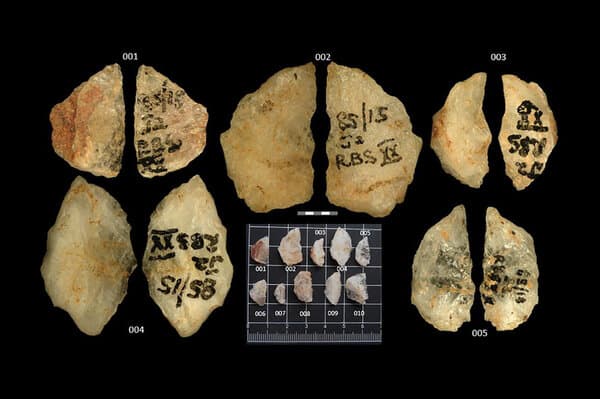
In a groundbreaking archaeological discovery in South Africa, scientists have identified the oldest known use of poison on weapons. Research published in the journal Nature reveals that hunter-gatherers living 60,000 years ago were applying poison to arrowheads. An international team of archaeologists analyzed residues found on small stone tips excavated at the Sibudu Cave site north of Durban. Using advanced mass spectrometry, the researchers detected traces of ricinoleic acid, a component of castor oil, and other compounds consistent with plant-based poisons. This discovery predates previous evidence of poisoned weapons by roughly 20,000 years, pushing back the timeline for this sophisticated hunting technology. The findings suggest that early modern humans possessed advanced knowledge of plant properties and their toxicological effects. This chemical expertise would have given them a significant advantage in hunting, allowing them to take down large, dangerous game with greater safety and efficiency. The ability to produce poisoned projectiles represents a major cognitive leap, requiring an understanding of botany, chemistry, and the preparation of toxic substances. The research team, led by scientists from the University of Oxford and the University of Witwatersrand, examined 18 stone points from Sibudu Cave. The cave contains a sequence of archaeological layers spanning thousands of years, showing continuous human occupation. The specific chemical signatures found on the stone tools match those of poisonous plants known to grow in the region, including the ricinoleic acid from castor beans. While pure ricin is deadly, castor beans also contain other compounds that could have been used as arrow poisons. The presence of these chemicals on hunting tools provides direct evidence of their use. This discovery highlights the advanced technical skills of ancient humans. Making effective arrow poison is not simple. It requires identifying the right plants, extracting the toxic compounds, and applying them to arrows in a way that would be stable and effective. This knowledge would have been passed down through generations. The use of poison fundamentally changes hunting dynamics. Hunters could wound an animal and then track it as the poison took effect, reducing the need for a direct, powerful kill shot. This method lowers the risk to the hunter from close-quarter attacks by prey. The Sibudu Cave is a crucial site for understanding Middle Stone Age technology. The layers where the poisoned tools were found date to between 58,000 and 60,000 years ago, a period associated with the behaviorally modern human populations. The discovery adds to the growing body of evidence that these early humans were capable of complex, multi-stage technological processes. It also provides insight into their diet and ecological knowledge. The researchers believe the poison was likely derived from plants such as the castor oil plant or other local species with similar toxic properties. The analysis involved extracting the microscopic residues from the hafting areas of the stone points, where the poison would have been applied to secure the point to the arrow shaft. This precise targeting of the chemical analysis confirms the link between the tools and the poison. The discovery of ancient poison use is exceptionally rare because organic materials degrade quickly. The preservation at Sibudu Cave, due to its dry conditions and specific soil chemistry, allowed these trace chemicals to survive for millennia. This is not just a story about poison; it is a story about the intellectual capabilities of our ancestors. It demonstrates foresight, planning, and the ability to manipulate the natural world to their advantage. The research contributes significantly to our understanding of human evolution and the development of hunting technologies. It shows that early humans were not just simple tool users but innovative scientists in their own right, experimenting with and utilizing complex chemical substances long before the advent of recorded history. The implications for understanding the spread of modern humans out of Africa are also significant. As these populations moved across the globe, they carried with them this advanced toolkit, which would have been essential for their survival in new and challenging environments. The findings from Sibudu Cave open a new window into the past, revealing a level of technological sophistication that challenges older views of primitive hunter-gatherers. This ancient poison represents one of the oldest known examples of humans using chemistry to alter their environment and secure their place at the top of the food chain.